Mark Lewisohn Interview Recs

Supplemental listening for Fine Tuning

Audio for most of these interviews can be found on Mark Lewisohn, a Beatles Historian, a beautifully maintained fan-made YouTube channel that has archived almost all of the interviews on this list. 

Interviews are linked directly to Apple podcasts, when possible. (YouTube links also included when applicable.)

Interview with Jean Louis-Polard, 2014
Topics of note: Neutrality and lack of bias

Fabcast podcast, 2017
013 MARK LEWISOHN | (YouTube)
Topics of note: The 80s and Paul McCartney’s solo career

Humans in Love podcast, 2018
#1 (Part One) Beatles Authority Mark Lewisohn 
Topics: Paul’s reaction to John’s murder

Fab4Cast podcast, 2019 
Talking to Mark Lewisohn: #1 Writing The Beatles’ History and #2 Spring 1969  | (YouTube links: #1#2)
Topics: Heroin; Allen Klein; the Liberty Bell; John and Yoko’s wedding; Paul and Linda’s wedding

Nothing Is Real podcast, 2019
The Mark Lewisohn Interview #14 Part One and #15 Part Two 
Topics of note: Tensions with Apple

Interview with Giljs Groenteman2019
Topics: Unbridled enthusiasm for John

I Am the EggPod podcast, 2019
The Star-Club tapes  | (YouTube)
Topics: John’s leadership; intention to make all his research accessible after the books are published

From Me To You podcast, 2020
Mark Lewisohn In Conversation w/ Richard Courtney | (YouTube link)
Topics: Philip Norman; today’s “anti-John stuff” 

Let It Roll podcast, 2020
Mark Lewisohn in Conversation w/Nate Wilcox | (YouTube)
Topics: The “no greater buddy” incident; Lewisohn defending Paul

Let It Be Beatles podcast, 2020
Mark Lewisohn – The Complete 2020 Let It Be Beatles Interview Podcast | (YouTube)
Topics: The benzedrine incident; John’s threesome with Royston Ellis; the 444 meeting and Geoff Emerick.

Fans on the Run podcast, 2022
Ep 73. Mark Lewisohn 
Topics: Working for Paul; tensions with Apple

Mocking Paul

Tune In’s take on Paul’s “Uncool” Musical Tastes

NOTE: The purpose of this analysis is not to exaggerate the severity of John’s onstage behavior which could have (at least occasionally) been conducted in good fun and camaraderie. The object is to determine whether or not Tune In is capable of presenting John’s disruptive and/or undermining behavior objectively in a way that allows the reader to judge the appropriateness of such behavior.

–//–

Multiple times throughout the book, Lewisohn writes with seeming approval about John undercutting Paul’s “soft” songs or musical tastes.

Here are five examples of this happening live, onstage:

On page 614, Lewisohn tells us how “Paul would flutter his eyelashes when he sang certain songs,” and calls Somewhere Over the Rainbow” one of [Paul’s] flutter numbers, guaranteed to go down a storm with the girls.”

Tune In describes John teasing Paul onstage: “John pointed to Paul, burst into raucous laughter and shouted, ‘God, he’s doing Judy Garland!’ Paul had to keep singing in the knowledge that John was pulling crips and Quasis behind his back or making strange sounds on his guitar to interrupt him.”

Of this, Lewisohn writes, “There were always several simultaneous reasons why an audience couldn’t take their eyes off the Beatles.”

About “Besame Mucho,” we get a quote from Lindy Ness: “When Paul sang ‘Besame Mucho,’ John used to stand behind him and make cripple faces. He had to: Paul was asking for it.” (p761).

During “A Taste of Honey,” John interrupts Paul’s performance by yelling at the audience. Lewisohn calls this behavior an example of “the Nerk Twins’ chemistry” (p1178).

When Paul sings “Till There Was You,” “[John] speaks most of the lines in a persistent piss-taking echo: ‘No, I never heard them at all’ (‘No, he never heard them’)” and Lewisohn writes, “[Paul’s] not even necessarily cross about it—he knows it’ll happen because this is John, and John is his fairground hero.” He also writes, “It’s part of the double-act, one among so many reasons they’re special together” (p1178).

Also about “Till There Was You”: “John really had a go at Paul for singing this—but didn’t try to stop him doing it, recognizing there was scope for all kinds of music in this group, to please all kinds of audiences” (p615).

Does it sound like John is preoccupied with projecting a “cool” image? We think so. Perhaps his undermining behavior garnered the praise and approval of a few (like Lindy Ness), but it could hardly be described as supportive of his partner (or reflective of good “leadership”).

And yet, Tune In always assures us that John is being awesome. Sometimes even a “hero.”

Instead of dispassionately framing John’s behavior as immature or insecure upstaging, Lewisohn calls John’s attention-seeking antics a part of John and Paul’s “chemistry,” which is “special and a “[reason] why an audience couldn’t take their eyes off the Beatles.”

And, of course, we hear once again that John is Paul’s “fairground hero.”

Somehow, by mocking Paul doing his “flutter numbers” John is “recognizing there’s scope for all kinds of music.”

Note that, according to Tune In, Paul himself isn’t recognizing scope by choosing and singing the songs (even in the face of mockery); John is recognizing scope by allowing him to do it (while simultaneously making fun of him for it).

Our final example is one where John doesn’t even allow Paul to finish his performance, and Tune In uses this to pay John the biggest compliment yet.

Regarding the Beatles’ live performance of Elvis’s hit single “Are You Lonesome Tonight”, only days after its release:

“Paul set down his guitar, clasped the microphone and did his Elvis act, the great solo star crooning his new slow one. It was already going to pot when he went into the long spoken-word middle section about ‘all the world’s a stage,’ which he’d crammed into his brain inside a few hours … and then John just stopped the group dead.

Refusing to be involved in anything so corny, John completely took the piss out of Paul, ripping his close mate and bandmate to shreds in front of everyone. ‘They sent me up rotten,’ Paul says, ‘especially John. They all but laughed me off the stage.’”

So from this description and Paul’s quote, we can surmise that the Beatles had rehearsed and prepared the number, “spoken-word middle section” and all. Why then, did John not object to the corny, spoken-word interlude during rehearsal? Assuming John’s mid-performance “piss-take” was not a comedy routine pre-planned by all the Beatles, this anecdote suggests that John knowingly set Paul up for public ridicule and relished the opportunity to pull the rug out from under him onstage.

To be clear, this would be a perfectly fine choice if Paul was in on the joke and consented to the bit. But deliberately setting Paul up to fail is unambiguously un-cool.

Nevertheless, here’s how Tune In justifies John’s behavior:

“This was the way John dealt with things, and he also knew the Beatles must have a solid front line, not back a soloist. As he said, ‘Every group had a lead singer in a pink jacket singing Cliff Richard-type songs. We were the only group that didn’t … and that was how we broke through, by being different” (586).

There’s no reason to connect John’s quote about “being different” to this anecdote (the footnote indicates his quote is taken from a December 1969 interview called “Pop Goes the Bulldog”) except to spin John’s behavior in the noblest way possible.

Paul wasn’t trying to be “a lead singer in a pink jacket”—he was merely taking the lead vocal just as John and George did in their turn. Did John also stop the band dead in the middle of his own solo spots, in order to ensure they kept a “solid front line” that would allow them to “[break] through by being different? Of course not. John is simply covering his embarrassment here, insecure about perceived softness, and seeking negative attention.

(For readers who may think we’re overblowing this topic, imagine for a moment if Paul was doing this to George Harrison onstage. Would Paul’s behavior be praised?)

It’s outrageous for Lewisohn to spin John’s every behavior into something awesome (“audiences couldn’t take their eyes off”; “fairground hero”), visionary (“we broke through by being different”), egalitarian (“solid front line”) broad-minded (“recognizing there was scope for all kinds of music”), and indicative of a GOOD PARTNER, actually (“part of the double-act”“Nerk Twins’ chemistry”“special together”).

Meanwhile, Paul is “asking for it” by doing “flutter numbers” “guaranteed to go down a storm with the girls,” “making his eyes big,” being “so corny,” and trying to be “the great solo star,” like a Cliff Richard knockoff “in a pink jacket.”

Does this portrayal look even-handed?

—//—

FULL EXCERPTS:

“[‘Are You Lonesome Tonight’] came out in Britain on Friday, January 13, and they did it the next night at Aintree Institute. Paul set down his guitar, clasped the microphone and did his Elvis act, the great solo star crooning his new slow one. It was already going to pot when he went into the long spoken-word middle section about ‘all the world’s a stage,’ which he’d crammed into his brain inside a few hours … and then John just stopped the group dead.

Refusing to be involved in anything so corny, he completely took the piss out of Paul, ripping his close mate and bandmate to shreds in front of everyone. ‘They sent me up rotten,’ Paul says, ‘especially John. They all but laughed me off the stage.’ This was the way John dealt with things, and he also knew the Beatles must have a solid front line, not back a soloist. As he said, ‘Every group had a lead singer in a pink jacket singing Cliff Richard-type songs. We were the only group that didn’t … and that was how we broke through, by being different’” (586).

—//—

“We always requested Paul to sing ‘Long Tall Sally.’ He used to say, ‘I can’t do it because it kills me throat,’ but then he would. He’d announce, ‘I’m doing this one for these two flossies over here,’ or something like that. Girls used to say his eyes were like mince pies. He had long eyelashes and would deliberately flutter them, and though you knew he was always aware of himself, he was so friendly to everybody that you couldn’t help but like him.’ 
—BERNADETTE FARRELL

One of the flutter numbers was ‘Over the Rainbow,’ guaranteed to go down a storm with the girls. The song from The Wizard of Oz seemed a strange choice, but the Beatles considered it valid because Gene Vincent did it. Paul sang it somewhere between the two versions, pausing impressively after the heightened ‘Somewhere’ and then sweetly rolling down. Cavern girls would get used to the sight: he made his eyes big, turned his face up and slightly at an angle and fixed his gaze above their heads on a brick at the far end of the center tunnel.

Sometimes John joined in with fine harmonies, but mostly he took the piss. Pete says that during one Cavern performance of ‘Over the Rainbow,’ John leaned back on the piano, pointed to Paul, burst into raucous laughter and shouted, ‘God, he’s doing Judy Garland!’ Paul had to keep singing in the knowledge that John was pulling crips and Quasis behind his back or making strange sounds on his guitar to interrupt him. Yet, if Paul stopped in the middle of the number, John would stare around the stage, the essence of innocence. There were always several simultaneous reasons why an audience couldn’t take their eyes off the Beatles.

Paul took such behavior from no one but John, but also he gave it back and was strong-minded enough to carry on doing what he wanted, knowing how much the audience liked it. He sang these songs well, and added one more to the portfolio at this time, the Broadway show number ‘Till There Was You,’ as covered in a new version by Peggy Lee—or Peggy Leg, as Paul called her. (He was given her record by his cousin Bett Robbins.) John really had a go at Paul for singing this—but didn’t try to stop him doing it, recognizing there was scope for all kinds of music in this group, to please all kinds of audiences … just so long as no one went near jazz” (614-15).

—//—

“LINDY NESS: ‘When Paul sang “Besame Mucho,” John used to stand behind him and make cripple faces. He had to: Paul was asking for it. But John wasn’t particular—he also took the piss out of George and Pete, mostly by imitations of some kind’” (761).

—//—

The tape throws great light on the Nerk Twins’ chemistry. While Paul is singing ‘A Taste of Honey,’ John suddenly shouts ‘SHUT UP TALKING!’ to someone in the audience, interrupting Paul much more than the chatterbox. Paul knows this, and is pitched into laughter. When he sings ‘Till There Was You,’ John—just a beat behind—speaks most of the lines in a persistent piss-taking echo: ‘No, I never heard them at all’ (‘No, he never heard them’). Paul chuckles and plows on; he can’t stop it, and he’s not even necessarily cross about it—he knows it’ll happen because this is John, and John is his fairground hero. It’s part of the double-act: the audience try to watch the singer but can’t tear their eyes off his mate, who’s probably also pulling crips. John couldn’t do this to anyone else without risking a thump, Paul wouldn’t accept it from anyone else; Paul gets to sing his song, John gets to undermine him. It’s just one facet of the complex sibling relationship they’ve always had, one among so many reasons they’re special together” (1178).
Fine Tuning: Ep 10 Unseen Paul


Listen HERE

SUMMARY: Unseen Paul builds on our earlier episodes by sharing even more quotes, stories, and insights about young Paul McCartney, who deserves a nuanced and dynamic portrait in any Beatles biography.

We explore some of his more overlooked character traits: his quirks and gifts; his stressors and anxieties; his unusual interests and values. These features reveal him as a fascinatingly dualistic artist and person.

SOURCES
Paul McCartney: the Definitive Biography by Chris Salewicz (1986)
The Beatles by Bob Spitz (2005)
“Portrait of Paul” Women Magazine by Mike McCartney (1965)
Magical Mystery Tours: My Time with the Beatles by Tony Bramwell (2006)
Many Years From Now by Barry Miles (1997)
Thank U Very Much by Mike McCartney
Paul McCartney on Howard Stern (2021)
“A Political Paul” Interview w/ Jonathan Powers for Prospect Magazine (Jan 17, 2009)
Paul McCartney interview w/ Hot Press magazine (2002)
Maureen Cleave “Intelligent Beatle”
“Mockers” Interview https://www.youtube.com/watch?v=j9e6zHA6eOY&t=116s
The Beatles Authorized Biography by Hunter Davies (1968)
The Beatles diary: Volume 1 by Barry Miles (2001)
BBC Interview “dyslexia” (October 4, 1997)
https://www.effinghamradio.com/2023/06/15/happy-birthday-paul-mccartney-2
Angie McCartney Interview w/ Geoffrey Guiliano (1984)
https://www.tumblr.com/pleasantlyinsincere/697307027602571264/angie-and-ruth-mccartney-on-saying-i-love-you-in?source=share
Mike McCartney; Beatles Book Monthly Magazine (1992)
Paul McCartney for New York Times Magazine (2020)
THE LYRICS by Paul McCartney and Paul Muldoon (2021)
Icke, Evelyn Hamann und die Beatles: Eine Art Biografie by Hans “Icke” Braun (2019)
A Cellar Full of Noise by Brian Epstein (1964)
Allan Williams quote from Music Legends The Beatles Special Edition by The Rock Review Music Legends Library (Sept 2, 2019)
https://issuu.com/codarecordsltd/docs/music_legends_beatles_special_edition
Interview w/ Horst Fascher for Deutschlandfunk Kultur (2006)
Astrid Kirchherr Interviewed by Colin Hall for Get Rhythm (August 2001)

PLAYLIST
Stairway to Paradise SARAH VAUGHAN
4 Pointers 1 TREVOR DUNCAN
Fine and Mellow ETTA JONES
Welcome to My World JIM REEVES
El Paso MARTY ROBBINS
You Go To My Head BILLIE HOLIDAY
Nature Boy NAT KING COLE
Black and White EARL ROBINSON
My Bucket’s Got a Hole in it HANK WILLIAMS
Spoonful HOWLIN WOLF
Since I Don’t Have You THE SKYLINERS
Perhaps DORIS DAY
Lonesome Town RICKY NELSON
Love to Love NINA SIMONE

Bonus Episode 2: John & Yoko, a Love Story

Happy Holidays! We’ve got THREE bonus episodes for you today!!! Sam Whiles of Paul or Nothing and Phoebe Lorde discuss two Made-for-TV films about the McCartneys and Lennons. Perfect listening for a post-Christmas haze!

In Bonus Episode 2, Join Phoebe and Sam Whiles, host of Paul or Nothing podcast, as they discuss the TV movie John and Yoko: A Love Story (1985).

Listen Here

Listen to Paul or Nothing Here

What does Get Back Teach Us About Leadership and Creative Collaboration?

It’s January 3, 1969 and Paul McCartney has found himself with an unwelcome list of roles in the Beatles’ latest project: producer, timekeeper, manager, arranger and band leader. He needs to delegate some of that responsibility but crucially, no one is reaching out for the baton.

Within the first 30 minutes of the film, we discover that Paul is the point man for Michael Lindsay Hogg (the Director), Glyn Johns (the Engineer) and Denis O’Dell (head of Apple Films). The film and music production heads confer with Paul about the recording equipment they need, the sound quality at Twickenham, and the proposed television special (Michael Lindsay-Hogg is continually pitching his ideas on this subject to Paul). McCartney then has the responsibility of disseminating this information to the other Beatles at his own discretion, based on what he perceives as their level of interest.

When it comes to the actual writing and rehearsing of the songs, Paul assumes the role of bandleader, but now he is in triage. His co-leader arrives exhausted, struggling with a heroin habit and without much new material. The partnership of Lennon/McCartney is the backbone of the Beatles, and Paul knows it. As half of that songwriting team, he gives most of his attention and energy to John. Unless he does that, John will drift and lose enthusiasm. Together John and Paul can reliably turn their half-baked ideas into hits, but to do that they need to connect and focus on each other.

At the same time, Paul needs to teach the songs to the rest of the band and reign things in when they go off course. This involves a great deal of balance, sensitivity and judgment. He must allow all the players the freedom to experiment, be flexible when things diverge into a potentially productive direction, back off on the instruction when the other players have adequately learned their parts and simultaneously curtail digressions that will lead them off-track.

It’s a delicate and daunting task at any time, but it’s made nearly impossible by the particular circumstances. George Harrison, in January 1969, was experiencing major personal problems outside the studio; his marriage was in crisis and there is a domestic situation that involves Eric Clapton (a name George brings up repeatedly during the early sessions).  In addition to the domestic problems, George is also arriving with a fair amount of resentment towards McCartney (and Lennon/McCartney) for his marginalization within the band.

Lesson 1: Delegate

It’s most constructive for teams to delegate roles and divide the labor fairly;  this ensures that one member is not left juggling too many obligations (which can lead to feeling overwhelmed and lost productivity).  It can also help team members negotiate what they need and want from each other and the project, so it’s more likely that all parties will feel satisfied along the way.

Furthermore, it’s extremely difficult to manage a project on top of being a creative member of the band. Both activities take up a large amount of mental and emotional bandwidth. It’s clear that becoming overwhelmed with the bulk of the creative and logistical responsibilities foisted upon him was a major contributor to McCartney’s occasional impatience with Harrison (and, to a lesser extent, Lennon). In exchange, he was asking for enthusiasm and support from his bandmates, because it was required in order for this project to take off and be seen through to fruition.

Because McCartney mostly handled the extra responsibility competently, the others may have assumed that it was easy for him, when it clearly wasn’t, causing him to feel frustrated and overwhelmed (“I get no support” he complains).  A little grace and acknowledgement from the others may have gone a long way towards diffusing difficult confrontations.

DAY 2

On Day 2 of rehearsals (January 3rd), When the band works on George Harrison’s All Things Must Pass (38 minutes in), Paul defers to Harrison and relinquishes the role of bandleader. McCartney mostly stays quiet and awaits Harrison’s instructions, but Harrison quickly abandons the song and insteads uses his moment at the helm to talk. McCartney wants to play rather than talk, but he listens respectfully without contributing much. Harrison repeatedly expresses a lack of self-confidence, at one point praising Clapton’s skill at “improvising and keeping it going, which I’m not good at.” Harrison continues that getting the solo to take on a “pattern” and resolve itself is “very hard.”

“That’s jazz” McCartney offers gently, but Harrison immediately disagrees. Paul says basically nothing more, allows George to steer the conversation and eventually All Things Must Pass is abandoned for the moment. 

McCartney’s hands-off approach when it comes to All Things Must Pass may be seen as “indifference” or “dismissiveness” by some, but it is an act of deference to the band member whose song they are learning. McCartney is aware that he can easily influence a song’s development and that Harrison is eager to prove himself and be respected as a songwriter, so Paul’s decision to remain in the background here reads like an acknowledgement of this.

Day 3

On Day 3 of the project, January 6, 1969, the band is rehearsing Two of Us, and the infamous “I can play whatever you want me to play” conversation (hereafter referred to as the “Orange Sweater Fight”) takes place.

During the “On our way home,” run of the song, John is singing, and George is working out a guitar riff.  Paul points out, “See we’re all gonna have to sort of bring together, ‘cause we’re all at odds.”

This begins a conversation in which Paul tries to communicate to George that he thinks it would work more efficiently to work on fleshing out the basic structure of the song before adding embellishments.  

Paul was trying to offer a workable solution and way forward, since they only had four of the 14 total songs they needed in total to complete the project.  His idea to maintain flow and efficiency was that the band could simply work out the bare bones of the numbers they had, without adding embellishments.  Then, once they had the bare structure of the songs set to where they were happy with them, they could go back and work on finer details.  This conversation seems to be interpreted by George as Paul dictating to George what to play and not being flexible enough to accommodate the way he works best.  Given the reality of the time constraints they were under, it seems instead that Paul was simply trying to float a more efficient way to work out the skeleton of the songs first.  

Lesson Two: Show Sensitivity

When faced with too much responsibility and pressure, a typical response by workaholics is often to “just work harder.” Grinding it out seems to be the only practical and logical way forward. This usually yields the most results, and in Paul’s case, as a highly creative and inspired person, usually the best results. To people who are accustomed to barreling forward and knocking down obstacles, the idea of breaking momentum can seem highly objectionable, counterintuitive and even frightening.

But most people when faced with too much pressure tend to fold or disengage. In this instance, it seems Harrison needed a space to vent his feelings and voice his concerns. What he required to maximize his creativity was special attention from his bandmates to feel like both a useful member of the team and a valued member of the family.

“It’s gotta just drive along like a car,” John says to Paul while rehearsing Two of Us shortly after the George and Paul tiff. What Paul and John couldn’t see at the time is that rather than push the car forward, at that moment they needed to veer left. If the band had taken a break from rehearsing to find out what was bothering George, it’s possible that things could’ve played out much differently. Although derailing the Beatles’ progress wasn’t the first instinct of this vigorous, prolific, fast-paced band – especially when under such tight deadlines- an hour or two to reconnect as friends and talk things through in a non-musical environment might’ve made all the difference. Sometimes a break actually yields better long-term results than relentlessly grinding away.

Day 5

On January 8th, Harrison brings in his newest song, I Me Mine (which ultimately ends up on the Let it Be LP).  George plays the song for Paul and Ringo as soon as McCartney arrives for the day while they informally stand around waiting for Lennon to arrive. “It’s lovely” says Lindsay-Hogg, but McCartney and Starr merely listen. Neither is particularly exuberant, but both are respectful.

When Lennon arrives, Harrison plays the song again, with more passion this time, as the four bandmates stand in a tight circle. Lennon offers some sarcastic commentary before finally offering his condescending assessment: “Run along, son. We’ll see you later. We’re a rock n’ roll band, you know.” George’s response is succinct: “I don’t care if you don’t want it. I don’t give a fuck”

Lennon’s nasty comment undoubtedly contributed to Harrison’s plummeting self-esteem within the group and his simmering resentments towards both Lennon and and the Lennon/McCartney team. Nevertheless, the band proceeds to work on I Me Mine later that day (while Lennon waltzes with Yoko Ono). It eventually ends up on the Let it Be LP, with no contributions whatsoever from Lennon.

Day 7

When George abruptly walks off set and (temporarily) quits the band two days later, no one is especially surprised, least of all John and Paul.

When the three remaining band members reconvene the following Monday, the three men have lunch together with Yoko and Linda. John and Paul discuss the underlying issues of George’s departure and how they should proceed (Although Jackson’s film claims that John and Paul are speaking privately, this is certainly not the case, as Yoko Ono, Linda Eastman and Ringo can all be heard contributing to the conversation in the original tapes).

The problem is quickly diagnosed (“It’s a festering wound that we allowed to go on” Lennon proclaims and McCartney readily agrees); the solution takes a bit more work. Lennon tries to articulate the problem of Paul’s creative control from Harrison’s point of view as well as his own (“That’s what we do to him and that’s what you do to me,” he says of McCartney’s intimidating approach). Lennon makes the additional point that although he is equally guilty of marginalizing George for the sake of Lennon/McCartney, he has become more aware of his behavior in the past year and has begun trying to stop it.

McCartney listens and acknowledges Lennon’s feedback before proposing that John step up and be the boss again. Jackson transcribes McCartney as saying “You have always been boss” (“you have always been at the front of the chute” he says in the original tapes) and although Lennon disagrees with this statement, McCartney seems to have identified part of the problem. Although both Lennon and McCartney are guilty of marginalizing Harrison and unconsciously (or consciously) teaming up against him, the simple fact is that Harrison responds better to Lennon’s authority than McCartney’s. For parents, where oversight is shared and roles are flexible according to circumstances, this is a familiar strain: You need to talk to him, he won’t listen to me.

Paul then gives Lennon an extensive, confidence-building pep talk before lunchtime is over. From this point on, it does seem that Lennon takes on more of a leadership role in the creation of Get Back. 

Lesson Three: Be Clear and Consistent

If we view Lennon as the leader in this situation, it should be evident that insulting a team member’s song right out of the gate is not advisable to long-term morale.

If we view McCartney as the leader in this situation, what do we take away? McCartney had no reaction to the brittle exchange between Lennon and Harrison; instead he worked with Harrison to help shape the song, both in rehearsals and afterwards in the studio a year later. Nevertheless, McCartney is often blamed for being “unsupportive” of Harrison’s songs.

If there is a lesson to be learned from this, perhaps it’s that sometimes the demands and expectations of others are impossible to control. The fact that Harrison continued to direct his anger and resentment at McCartney rather than Lennon (who he continued to pursue as an ally even after treatment like that described above) suggests a no-win situation for McCartney. The fact that Paul’s polite but tepid reaction to I Me Mine is typically viewed more critically than Lennon’s hostile one reveals a great deal about who we believe wields the most creative power in the band as well as our expectations about both men’s behavior.

Leadership between Lennon and McCartney was fluid throughout the Beatles, alternating in accordance with the circumstances and demands of a particular situation. But leadership occasionally needs to be clearly defined, even if only in a temporary, situational capacity.  

In the “Orange Sweater fight” with George, Lennon remained effectively silent until McCartney finally called him out directly (“YOU know I’m right”) at which point John finally stepped in with an opinion. Similarly, McCartney allowed Lennon to first insult and then contribute nothing musically to I Me Mine.

Although George’s marginalization at the hands of Lennon/McCartney is the biggest problem here, Lennon/McCartney nevertheless need to be on the same page in terms of how they are going to manage the sessions. Partners need to agree on a division of responsibility and then back each other up. 


Interested in listening to the unedited audio tapes from Get Back session?
Check out this blog: https://amoralto.tumblr.com/getback

AKOM Presents: Pizza and Fairytales

Episode 5: Make It Right

‘Pizza and Fairytales’ is John Lennon’s phrase— a brilliant one—and he conjured it to describe one man: Paul McCartney. 

John in the 70’s is fairly well documented. But what about the less communicative, less examined half of Lennon/McCartney? In this episode, Phoebe and Daphne give McCartney two things he doesn’t often get: detailed lyrical analysis and recognition of his atypical self-expression. Extending this basic respect serves to shine a brighter, warmer light on the Lennon/McCartney relationship—not just in the 70s but up to present day and beyond. 

Lennon and McCartney will be joined forever; they deserve to have their true story told.

Listen Here.

image

Thru the AKOM Lens: Magical Mystery Tour

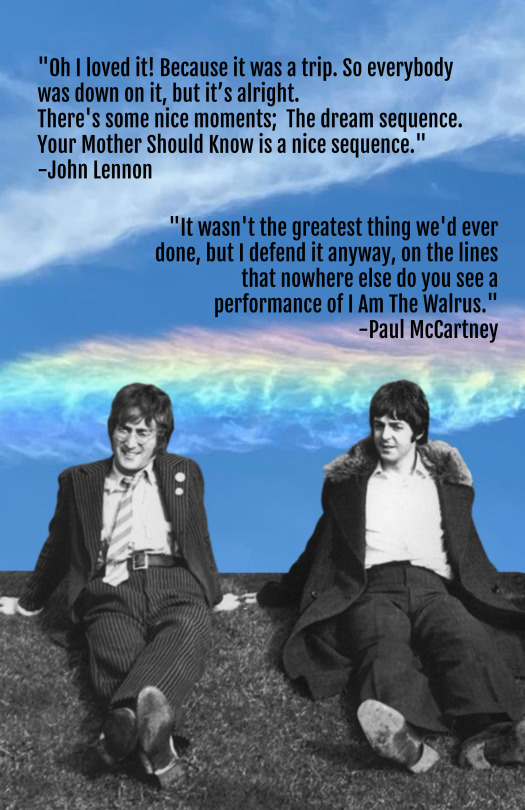
Learn all about the much-maligned Magical Mystery Tour with Phoebe and Kristen.  They discuss the film’s influences, broader cinematic context and lasting cultural impact.

You won’t want to miss this in-depth look into an important but much over-looked milestone in the Beatles oeuvre! (x)

Another Kind of Mind is available on Apple Podcasts, Spotify, Google Podcasts, Podbean, and most other podcast platforms.

AKOM: Magical Mystery Tour

image
image

Thru the AKOM Lens: Magical Mystery Tour

CONTENTS

  • Influences and Context 2:23
  • Critical Reception. Does MMT warrant Re-evaluation? 18:50
  • Stanley Kubrick – echoes of MMT 44:30
  • Weekend – a slice of 1967 art cinema 1:09:21
  • Discussion of Magical Mystery Tour 1:25:26

    TW: brief mention of a (fictional) sexual assault on a minor in the Kubrick section

SOURCES

Juli Kearn’s analysis of A Clockwork Orange:

http://idyllopuspress.com/idyllopus/film/co_three.htm#magical

Rob Ager’s analysis of the Bear in the Shining: https://www.youtube.com/watch?v=dW2GrG7Zk0U

image

FILMOGRAPHY (movies referenced in the podcast)

  1. Magical Mystery Tour (1967) The Beatles
  2. Strawberry Fields Forever (1967) Peter Goldmann
  3. The Seventh Seal (1957) Ingmar Bergman
  4. One Plus One (1969) Jean-Luc Godard
  5. The Trial (1960) Orson Welles
  6. 8 ½ (1060) Federico Fellini
  7. Scorpio Rising (1960) Kenneth Anger
  8. Empire (1966) Andy Warhol
  9. Running, Jumping Standing Still (1959) Dick Lester
  10. Weekend (1967) Jean-Luc Godard
  11. Daisies (1966) Věra Chytilová.
  12. The Shining (1980) Stanley Kubrick
  13. A Clockwork Orange (1971) Stanley Kubrick
  14. 2001 (1969) Stanley Kubrick
  15. Barry Lyndon (1975) Stanley Kubrick
  16. Dr. Strangelove (1964) Stanley Kubrick
  17. The Astronomer’s Dream (1898) Georges Méliès
  18. Breathless (1960) Jean-Luc Godard
  19. Tom Jones (1963) Tony Richardson
  20. The Cook, the Thief, His Wife and Her Lover (1989) Peter Greenaway
  21. A Taste of Honey (1961) Tony Richardson

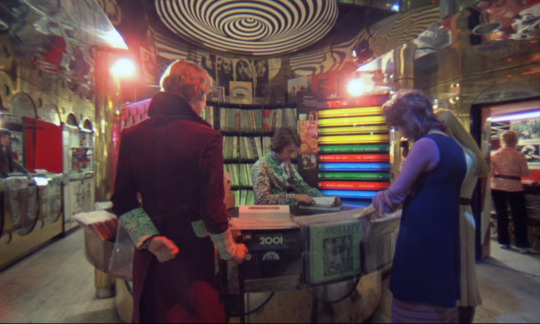
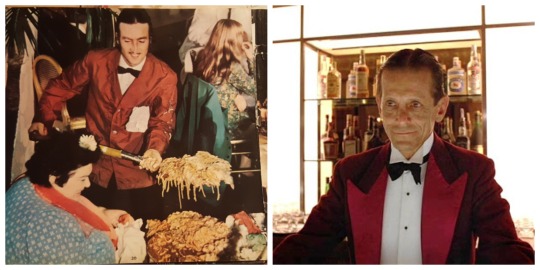
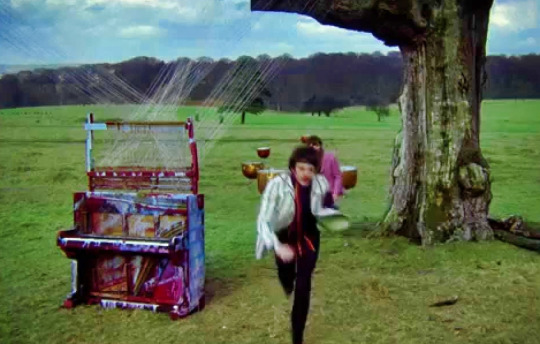
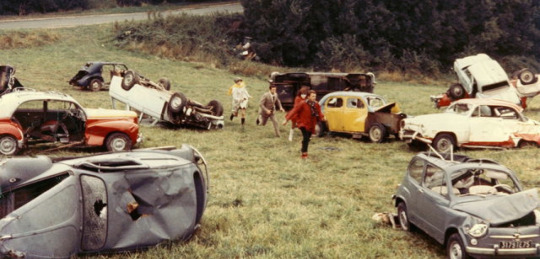
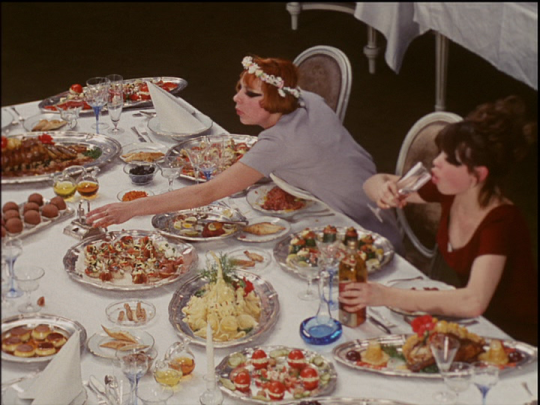
(Photos, L to R: A Clockwork Orange, Magical Mystery Tour, The Shining. Strawberry Fields Forever, Weekend, Daisies)

image
image

Another Kind of Mind is available on Apple Podcasts, Spotify, Google Podcasts, Podbean, and most other podcast platforms.

A Tumblr User Asked:

Have any of you watched the Understanding Lennon/Mccartney series on YouTube? If yes, what are your thoughts? If not, I would absolutely recommend it

Hi there!

We completely agree that Understanding Lennon/McCartney is an excellent series – all of us at AKOM have seen it and thoroughly enjoy it. We highly recommend this series and all of Breathless345’s work to our listeners!

All the best,

Thalia